PalladiumXPDUSD
Daily Market Briefing
Latest briefing
Palladium (XPDUSD) rises 2.17% to $1,118.22 amid short-covering and supply constraints.
Over the past 24 hours, palladium prices have increased by 2.17%, reaching $1,118.22. This uptick is attributed to aggressive short-covering and technical buying, as institutional investors unwind bearish positions. Additionally, supply-side constraints in major producing regions, particularly South Africa and Russia, continue to support the metal's valuation.
Previous briefings
Palladium price declines to $1,122.54 amid market volatility
Over the past 24 hours, palladium (XPDUSD) has experienced a decline, closing at $1,122.54 on October 13, 2026. This downturn is attributed to a combination of factors, including a stronger U.S. dollar and market volatility.
Palladium prices remain near one-year lows amid subdued demand and supply concerns.
Palladium futures have been trading below $1,200 per ounce, approaching their lowest levels since September 2025. This decline is driven by a combination of factors, including subdued demand due to the growing adoption of electric vehicles and supply constraints from major producers like Russia and South Africa. Additionally, geopolitical tensions, such as recent tanker attacks in the Strait of Hormuz, have raised concerns over inflationary pressures, further impacting market sentiment.
Palladium prices surge 2.02% to $1,147.85 amid softening macroeconomic conditions
Over the past 24 hours, palladium prices have risen by 2.02%, reaching $1,147.85. This increase is attributed to a softer macroeconomic environment and significant short-covering by institutional investors. Additionally, constrained global mine supply and steady near-term industrial consumption have supported physical valuations.
Palladium prices decline 5.15% to $1,114 amid supply concerns and market surplus forecasts.
Over the past 24 hours, palladium prices have fallen by 5.15%, reaching $1,114 per ounce. This decline is attributed to concerns over a potential market surplus and ongoing supply issues in key producing countries.
Palladium (XPDUSD) surges 2.05% to $1,141.66 amid easing macroeconomic headwinds.
Palladium prices rose 2.05% to $1,141.66 on October 8, 2026, driven by a temporary easing of macroeconomic pressures and institutional short-covering. A decline in global crude oil prices reduced inflation expectations, leading to lower U.S. Treasury yields and a weaker U.S. dollar, which supported the precious metal. Additionally, operational challenges in key producing regions, such as South Africa and Russia, provided fundamental support to the market.
Palladium prices decline to $1,122.50, nearing 12-month low amid strong dollar
Palladium prices have fallen to $1,122.50 per ounce, approaching a 12-month low, driven by a stronger U.S. dollar and elevated Treasury yields. These macroeconomic factors have increased the opportunity cost of holding non-yielding assets like palladium. Additionally, concerns over weaker automotive demand and a potential market surplus have added downward pressure on prices.
Palladium price remains steady at $1,283 amid market stability
Over the past 24 hours, palladium's price has remained unchanged at $1,283 per troy ounce, indicating market stability. This steadiness comes amidst recent reports detailing faster spot deliveries and a modest recovery in the domestic automotive sector, offering a glimpse into the evolving dynamics of this precious metal.
Palladium prices decline to $1,172.50 amid stronger US dollar and rising Treasury yields.
Over the past 24 hours, palladium prices have fallen to $1,172.50 per ounce, reaching a one-year low. This decline is attributed to a stronger US dollar and elevated Treasury yields, which have made dollar-priced metals more expensive for overseas buyers. Additionally, expectations of weaker automotive demand and a shift toward a market surplus, due to declining gasoline vehicle production and higher recycling, have added to the downward pressure on palladium prices.
UBS raises palladium price forecasts for late 2026 and early 2027 amid supply constraints.
UBS has increased its palladium price forecasts for late 2026 and early 2027, citing a tighter physical market driven by resilient automotive demand and contracting global mine supply. The bank raised its price projections for December 2026 and March 2027 by $200 per ounce each, while increasing its June 2027 forecast by $100 per ounce. This revision reflects a market that is proving tighter than previously projected.
Palladium drops 2.6% to $1,175.26 amid rising Treasury yields and strong dollar.
Palladium prices declined by 2.6% to $1,175.26, nearing a 52-week low, due to elevated U.S. Treasury yields and a strengthening dollar. These macroeconomic factors, combined with concerns over weakening automotive demand, have pressured the metal's price.
UBS raises palladium price forecasts amid tightening supply
UBS has increased its palladium price forecasts for late 2026 and early 2027, citing a tightening physical market. The bank anticipates a modest decline in global demand in 2025, with expectations of stability in 2026, supported by slower-than-expected reductions in internal combustion engine use and ongoing hybrid vehicle adoption in gasoline-heavy markets. On the supply side, global palladium mine production declined in 2025 and is expected to contract again in 2026, with Russian output affected by declining ore grades and South African producers prioritizing capital discipline over volume growth. Improved recycling helps but does not fully offset the weakness in mined supply, creating a tighter market backdrop that is likely to limit price downside this year.
Palladium rebounds 2% to $1,232.68 amid technical short covering and supply concerns.
Over the past 24 hours, palladium prices have increased by 2%, reaching $1,232.68. This uptick is attributed to technical short covering and ongoing supply concerns, particularly in South Africa and Russia. Despite this rebound, the market remains cautious due to persistent supply vulnerabilities and geopolitical risks.
Palladium prices remain near seven-week low amid tight supply and demand concerns.
Palladium prices have recently declined to their lowest levels in seven weeks, hovering around $1,262 per ounce. This downturn is attributed to a combination of factors, including rising sovereign yields, hawkish Federal Reserve signals, and a projected market surplus due to increased recycling and reduced consumption in catalytic converters.
UBS raises palladium price forecasts for late 2026 and early 2027 amid tighter supply.
UBS has increased its palladium price forecasts for December 2026 and March 2027 by $200 per ounce each, citing a tighter physical market due to resilient automotive demand and contracting global mine supply. The bank also raised its June 2027 forecast by $100 per ounce. Despite these near-term bullish projections, UBS maintains a cautious long-term outlook, anticipating a decline in demand as electric vehicle adoption increases.
UBS raises palladium price forecasts for late 2026 and early 2027 amid tighter supply.
UBS has increased its palladium price targets for December 2026 and March 2027 by $200 per ounce each, citing a tighter physical market and more resilient demand than previously anticipated. The bank also raised its June 2027 forecast by $100 per ounce. Despite these adjustments, UBS maintains a cautious long-term outlook for palladium, considering the expected impact of vehicle electrification on demand.
Palladium prices hold steady near $1,300 amid Fed rate hike and supply concerns
Over the past 24 hours, palladium prices have remained relatively stable, trading near $1,300 per ounce. This stability follows the Federal Reserve's recent interest rate hike, which has increased the opportunity cost of holding non-yielding assets like palladium. Additionally, ongoing supply concerns, particularly in South Africa and Russia, continue to influence market dynamics.
Palladium drops 2.94% to $1,272.90 amid stronger dollar and rate hike expectations
Palladium prices declined by 2.94% to $1,272.90 on September 23, 2026, influenced by a stronger U.S. dollar and expectations of higher interest rates. Despite UBS raising its near-term palladium price forecasts due to tighter supply, the immediate market response was negative.
UBS raises palladium price forecasts amid tightening supply
UBS has increased its palladium price forecasts for December 2026 and March 2027 by $200 per ounce each, citing tighter physical market conditions and more resilient demand than previously expected. The bank also raised its June 2027 forecast by $100 per ounce. Despite these adjustments, UBS maintains a cautious long-term outlook due to anticipated declines in demand from vehicle electrification.
Palladium prices hold steady at $1,305 amid modest selling pressure.
Over the past 24 hours, palladium prices have remained relatively unchanged, closing at $1,305 on September 21, 2026. This stability follows a 2.17% gain over the previous week, indicating a period of consolidation after recent fluctuations. The broader 30-day trend shows a decline of 3.41%, suggesting ongoing challenges in the market.
Palladium rises 2.32% to $1,327.70 on September 18, 2026.
Palladium experienced a 2.32% increase on September 18, 2026, closing at $1,327.70. This uptick extends a modest upward trend over the past month, with a 2.49% gain. The market remains influenced by ongoing supply constraints and evolving demand dynamics.
Palladium prices rise above $1,300 per ounce amid market volatility
Over the past 24 hours, palladium prices have fluctuated, briefly surpassing $1,300 per ounce before experiencing a slight decline. This volatility reflects ongoing market dynamics influenced by various economic factors.
Palladium (XPDUSD) rises 2.05% to $1,290.63 amid supply constraints and technical short-covering.
Palladium prices increased by 2.05% to $1,290.63 on September 17, 2026, driven by persistent supply-side vulnerabilities and technical short-covering. Operational challenges in South African mining and geopolitical tensions affecting Russian exports have constrained palladium supply. Additionally, a weakening US dollar and shifting macroeconomic expectations have prompted institutional investors to adjust positions, further supporting the price increase.
Palladium recovers above $1,300 amid rising U.S. inflation concerns
Palladium prices have rebounded to over $1,300 per ounce following a significant sell-off. This recovery coincides with a new U.S. consumer price report that has increased expectations of an interest rate hike in the coming week. The interplay between these factors suggests that while palladium is regaining some ground, the potential for higher interest rates may continue to influence its price trajectory.
Palladium prices edge higher, closing at $1,370.97 on September 10, 2026.
Palladium experienced a modest increase of 1.32% on September 10, 2026, closing at $1,370.97. This uptick contributes to a slight weekly gain of 0.85%, though the metal remains down 1.40% over the past month. The market continues to grapple with supply constraints and fluctuating demand, leading to price volatility.
Palladium prices edge lower amid supply concerns and demand shifts
Over the past 24 hours, palladium prices have experienced a slight decline, influenced by ongoing supply constraints in major producing regions and evolving demand dynamics in the automotive sector. While supply issues in South Africa and Russia continue to pose challenges, the market remains attentive to shifts in demand, particularly with the increasing adoption of electric vehicles and the substitution of palladium with platinum in catalytic converters.
Palladium prices declined by 2.74% to $1,355.08 on September 8, 2026.
Over the past 24 hours, palladium prices have fallen by 2.74%, closing at $1,355.08 on September 8, 2026. This decline extends a broader downtrend, with the metal losing 2.63% over the past week and 0.12% over the past month. The recent price movement reflects ongoing market volatility and investor sentiment shifts.
Palladium prices decline amid profit-taking and market volatility.
Over the past week, palladium prices have experienced a decline due to profit-taking after a recent surge. The metal's price fell 1.50% on Friday, extending a weekly decline. Analysts attribute this downturn to market volatility and profit-taking behaviors.
Palladium (XPDUSD) rises 3.38% to $1,410.66 on September 4, 2026.
Palladium experienced a significant price increase on September 4, 2026, closing at $1,410.66, up 3.38% from the previous day. This surge is attributed to a shift towards more accommodative monetary policy expectations, leading to a weaker U.S. dollar and lower Treasury yields, which in turn bolstered demand for palladium. Additionally, supply constraints in key producing countries, Russia and South Africa, have supported the metal's price.
Palladium (XPDUSD) rises 2.19% to $1,363.16 amid tightening supply and stable demand.
Palladium prices increased by 2.19% on September 3, reaching $1,363.16. This surge was driven by tightening global supply, particularly due to reduced Russian mine output, and sustained demand from the automotive sector. A weaker US dollar further supported the upward price momentum.
Analyze any chart in seconds
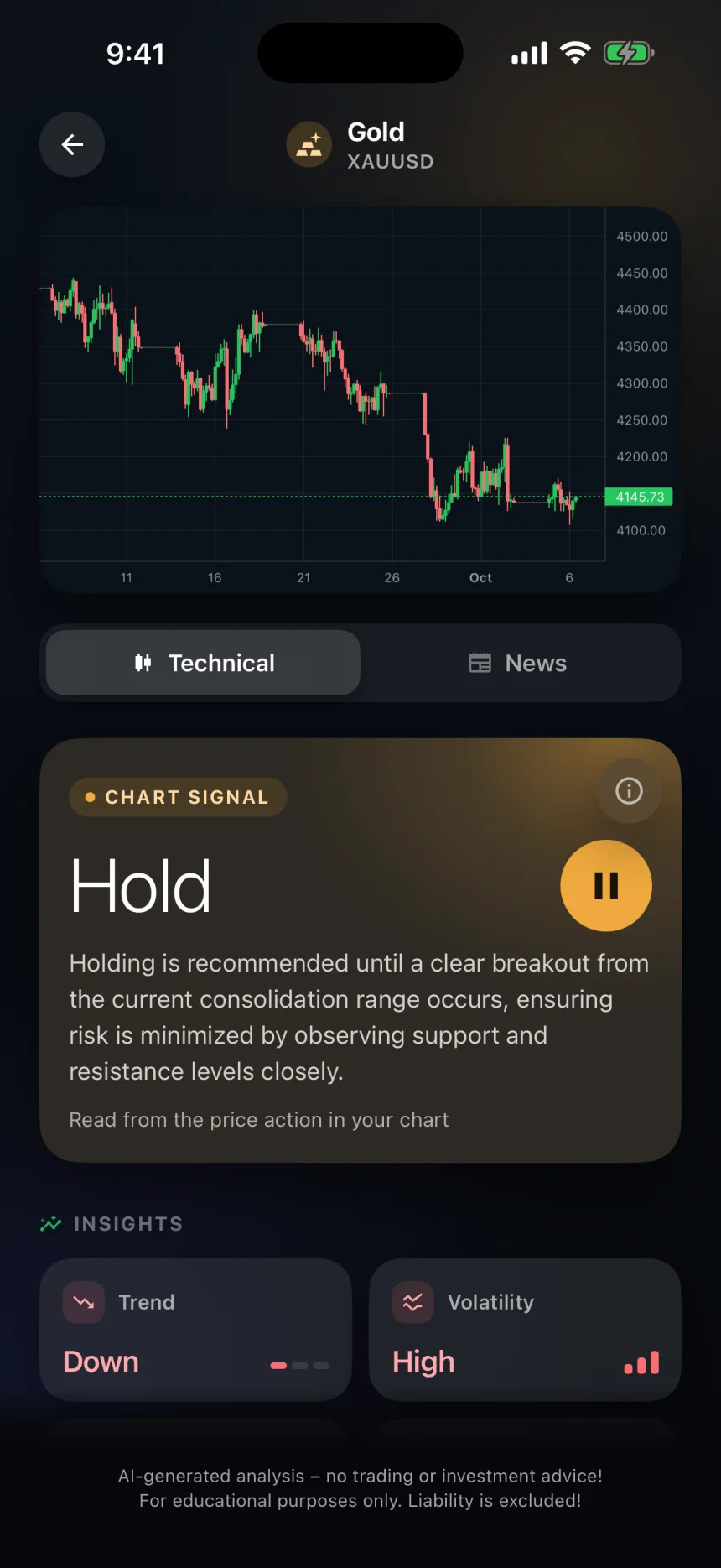
This is today's read on Palladium. Point your camera at any chart and ChartDetector AI gives you a full technical analysis in seconds — free on iPhone and Android.
AI-generated from public news sources. Not financial advice.