EUR/USDEURUSD
Daily Market Briefing
Latest briefing
EUR/USD rebounds to 1.1217 as dollar retreats after US inflation data.
The EUR/USD pair experienced a rebound to 1.1217 after reaching a 17-month low of 1.1114, driven by a retreat in the US dollar following the release of US inflation data. Despite this recovery, the euro faces ongoing challenges due to political uncertainty in France and the Federal Reserve's hawkish stance on interest rates.
Previous briefings
EUR/USD drops to 17-month low at 1.1135 amid US inflation surge
In the past 24 hours, EUR/USD has declined to a 17-month low of 1.1135, influenced by a higher-than-expected US core CPI of 2.6% and a widening US-German 10-year yield spread. These factors have intensified the dollar's strength, pressuring the euro.
EUR/USD remains under pressure amid weak Eurozone data and French political uncertainty.
In the past 24 hours, EUR/USD has faced downward pressure due to weaker-than-expected Eurozone manufacturing and services PMI data, indicating potential economic slowdown. Additionally, political uncertainties in France, including rising public debt and upcoming elections, have further dampened investor sentiment toward the euro.
EUR/USD drops below 1.12 as Fed's hawkish stance and geopolitical tensions strengthen USD.
The EUR/USD pair declined below the 1.12 mark, influenced by hawkish remarks from Federal Reserve officials and escalating geopolitical tensions. Cleveland Fed President Beth Hammack's comments on potential rate hikes to combat inflation have bolstered the US Dollar. Additionally, ongoing conflicts in the Middle East and Eastern Europe have heightened demand for safe-haven assets, further pressuring the Euro.
EUR/USD remains near 17-month low amid French debt concerns and strong USD.
EUR/USD continues to trade near its lowest levels since May 2025, influenced by escalating French debt concerns and the U.S. dollar's strength. The euro's decline is further exacerbated by widening European debt spreads and persistent U.S. Treasury yields.
EUR/USD dips to 1.1226 amid French fiscal concerns and Spanish political tensions.
In the past 24 hours, EUR/USD has declined to 1.1226, influenced by rising political uncertainty in Europe. France's escalating public debt and political deadlock, along with Spain's snap general election announcement, have heightened investor concerns, leading to euro weakness.
EUR/USD dips below 1.1200 amid French fiscal concerns and rising oil prices.
The EUR/USD pair has fallen below the 1.1200 threshold, influenced by escalating French fiscal issues and a surge in oil prices. French government bond spreads have widened, reflecting investor apprehension over the country's fiscal health, while Brent crude prices exceeding $105 have intensified inflation concerns, further pressuring the euro.
EUR/USD declines to 17-month low as French bond yields rise and dollar strengthens
In the past 24 hours, EUR/USD has fallen to a 17-month low, influenced by rising French bond yields and a strengthening U.S. dollar. The French 10-year yield increased to 4.73%, narrowing the spread with German Bunds to 129 basis points, while the U.S. dollar index held near a two-month high. These factors have contributed to the euro's decline against the dollar.
EUR/USD drops to 16-month low at $1.1310 amid French fiscal concerns.
In the past 24 hours, EUR/USD has declined to a 16-month low of $1.1310, influenced by concerns over France's fiscal health and its potential impact on the eurozone's stability. This development has intensified bearish sentiment toward the euro.
EUR/USD drops to 1.1161, lowest since May 2025, amid French fiscal concerns.
In the past 24 hours, EUR/USD declined to 1.1161, its lowest level since May 2025, driven by escalating concerns over France's fiscal stability and political uncertainties. The widening spread between French and German 10-year government bond yields, reaching 147 basis points—the widest since 2012—has intensified investor apprehension. Additionally, Spain's announcement of snap elections has further contributed to the euro's weakness.
EUR/USD drops below 1.13 for first time since May 2025 amid strong USD
EUR/USD has fallen below the 1.13 mark, reaching its lowest level since May 2025. This decline is driven by robust U.S. Treasury yields and concerns over fiscal stability in the Eurozone, particularly in France.
EUR/USD dips below 1.1250 as U.S. Treasury yields hit 5.3%, strengthening the dollar.
In the past 24 hours, the EUR/USD pair has declined below the 1.1250 mark, reaching a 17-month low. This movement is primarily driven by a significant rise in U.S. Treasury yields, which have reached 5.3%, bolstering the U.S. dollar and widening the yield differential between the U.S. and Europe. Additionally, weaker-than-expected U.S. labor market data has tempered expectations for a Federal Reserve interest rate hike in October, further influencing the currency pair.
EUR/USD stabilizes near 1.1250 after weaker-than-expected U.S. employment data.
In the past 24 hours, EUR/USD has remained relatively stable, trading around 1.1250. This stability follows the release of weaker-than-expected U.S. employment data, which has dampened expectations for further Federal Reserve rate hikes. The European Central Bank's cautious stance on monetary policy continues to limit the euro's upside potential.
Euro hits May 2025 lows against US Dollar amid rising oil prices and Fed rate hike speculation.
In the past 24 hours, the EUR/USD pair has declined to its lowest level since May 2025, trading at 1.1235 USD. This drop is primarily driven by escalating oil prices, which have intensified inflation concerns and bolstered expectations of further interest rate hikes by the Federal Reserve. Consequently, the US Dollar has strengthened, exerting downward pressure on the Euro.
EUR/USD dips below 1.1350 as US dollar strengthens on hawkish Fed signals
The EUR/USD pair has fallen below the 1.1350 mark, influenced by the US dollar's strength following hawkish signals from Federal Reserve officials. Cleveland Fed President Beth Hammack emphasized the need for restrictive monetary policy to address persistent inflation risks. Additionally, rising US Treasury yields have further bolstered the dollar, contributing to the euro's decline.
EUR/USD remains steady near 1.1370 as dollar consolidates post-FOMC gains.
Over the past 24 hours, EUR/USD has maintained stability around the 1.1370 mark, with the U.S. dollar consolidating its recent gains following the Federal Open Market Committee's (FOMC) hawkish stance. The Federal Reserve's decision to raise interest rates by 25 basis points to 3.75%-4.00% has bolstered the dollar, while the European Central Bank's (ECB) cautious approach continues to weigh on the euro.
EUR/USD remains stable amid balanced ECB and Fed rate expectations.
Over the past 24 hours, EUR/USD has maintained stability, with both the European Central Bank (ECB) and the Federal Reserve (Fed) signaling similar paths for future interest rate hikes. This alignment has kept the exchange rate relatively unchanged.
EUR/USD remains near one-month low amid Fed rate hike expectations and oil price volatility.
Over the past 24 hours, EUR/USD has continued its decline, reaching a one-month low. This movement is primarily driven by heightened expectations of a Federal Reserve rate hike and fluctuations in oil prices. The U.S. dollar's strength, bolstered by these factors, has exerted downward pressure on the euro.
EUR/USD drops to 1.1380 amid widening ECB-Fed rate gap
The EUR/USD pair declined to 1.1380, its lowest level since July 28, 2026, as the European Central Bank's deposit rate of 2.50% lags behind the Federal Reserve's 3.75%-4.00% range. This 125–150 basis point difference continues to weigh on the euro. Despite a strong Eurozone PMI of 53.1, the euro's weakness persists.
EUR/USD declines to 1.1450 amid USD strength and geopolitical concerns.
Over the past 24 hours, EUR/USD has fallen to 1.1450, driven by a stronger US dollar and escalating geopolitical tensions. The market continues to favor the dollar, with EUR/USD trading below the 61.8% Fibonacci level at 1.1473 and approaching the 76.4% level at 1.1416.
EUR/USD stabilizes near 1.1460 after Fed's hawkish rate hike.
In the past 24 hours, EUR/USD has remained relatively stable around 1.1460 following the Federal Reserve's recent 25 basis point rate hike to a 3.75%-4.00% range. This move has widened the interest rate differential between the U.S. and the Eurozone, contributing to the euro's subdued performance. Market participants are now focusing on upcoming economic data releases and central bank communications for further direction.
EUR/USD remains below 1.1500 amid German political uncertainty
In the past 24 hours, EUR/USD has struggled to maintain levels above 1.1500, influenced by political instability in Germany. The recent electoral defeat of Chancellor Friedrich Merz's party has heightened concerns, overshadowing the positive impact of declining oil prices.
EUR/USD stabilizes at 1.1465 after Fed's 0.25% rate hike; further increases anticipated.
In the past 24 hours, the EUR/USD exchange rate has remained relatively stable, trading at 1.1465, following the Federal Reserve's decision to raise interest rates by 0.25%—its first increase since summer 2023. The Fed's unanimous decision underscores its commitment to monetary policy independence, despite external pressures. Market participants are now anticipating at least one more rate hike by the end of the year.
EUR/USD drops to four-week low amid rising Fed hawkishness and geopolitical tensions.
Over the past 24 hours, EUR/USD has declined to a four-week low, trading near 1.1566. This movement is driven by escalating expectations of a hawkish Federal Reserve stance and increased geopolitical uncertainties. The U.S. dollar has strengthened as investors seek safe-haven assets amid these developments.
Citi forecasts EUR/USD could retest 1.17 after next week's Fed decision.
Citi strategists suggest that EUR/USD may approach 1.17 if the Federal Reserve's upcoming decision leads to a 'sell the news' reaction in the dollar. However, geopolitical and energy risks could limit the greenback's downside.
EUR/USD dips below 1.1600 amid ECB rate hike and US inflation data.
The EUR/USD pair has fallen below the 1.1600 mark following the European Central Bank's recent interest rate hike and the release of U.S. inflation data. The ECB's decision to raise rates by 25 basis points to 2.50% has intensified concerns about potential growth risks in the Eurozone. Simultaneously, the U.S. Producer Price Index (PPI) data indicates rising inflationary pressures, bolstering expectations of further Federal Reserve tightening.
EUR/USD remains capped below 1.1700 as dollar strength persists.
EUR/USD continues to face resistance below the 1.1700 level, with the U.S. dollar maintaining its strength due to robust economic data and a hawkish Federal Reserve stance. The European Central Bank's cautious approach contrasts with the Fed's policies, contributing to the euro's struggle to gain momentum.
EUR/USD edges higher as markets reverse recent sell-off triggered by Warsh's speech.
Over the past 24 hours, EUR/USD has been recovering from a recent decline caused by Kevin Warsh's speech, with the pair moving back toward 1.1650. This rebound is supported by a generally weaker US dollar against emerging market currencies and pro-growth G10 currencies. However, potential political risks in Germany, such as the upcoming local elections, could pose challenges to the euro's stability.
EUR/USD dips below 1.1600 as US dollar strengthens amid Fed's hawkish stance.
The EUR/USD pair has fallen below the 1.1600 threshold, influenced by the US dollar's strength stemming from the Federal Reserve's hawkish policy outlook. This trend is further supported by escalating geopolitical tensions in the Middle East, which have bolstered the dollar's safe-haven appeal.
EUR/USD drops to 1.1584 after Fed's Warsh hints at rate hikes.
The EUR/USD pair declined to 1.1584 following Federal Reserve Chair Kevin Warsh's hawkish remarks, suggesting potential rate hikes. Additionally, concerns over escalating tensions between Russia and Ukraine have further pressured the euro.
Analyze any chart in seconds
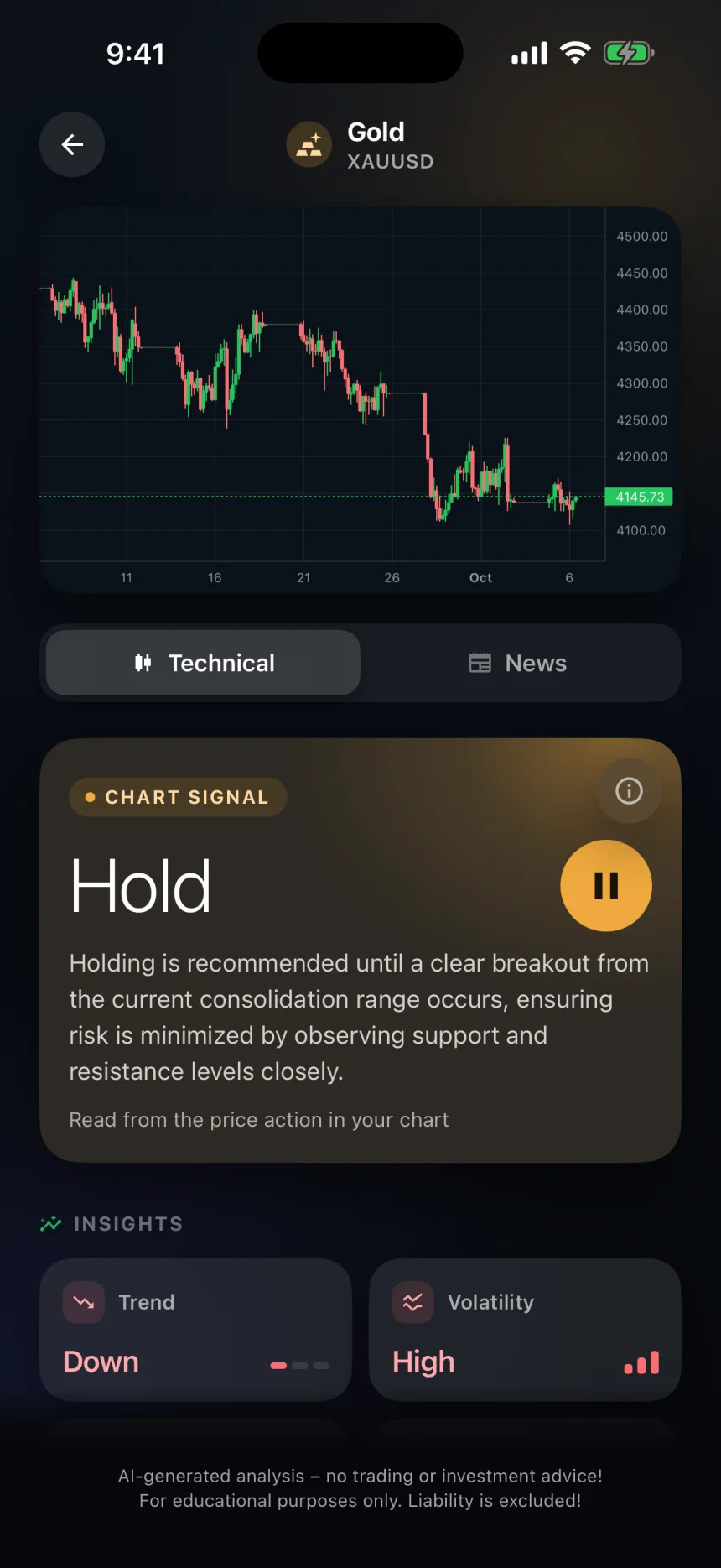
This is today's read on EUR/USD. Point your camera at any chart and ChartDetector AI gives you a full technical analysis in seconds — free on iPhone and Android.
AI-generated from public news sources. Not financial advice.