IntelINTC
Daily Market Briefing
Latest briefing
Intel's stock drops over 6% amid AI safety concerns and Terafab's shift to TSMC
Intel's stock declined by over 6% following concerns about AI safety and reports that Terafab is in talks with TSMC for a dedicated chip facility. These developments have raised investor apprehension regarding Intel's position in the semiconductor market.
Previous briefings
Intel's GPU D-Series AI accelerator unveiled, targeting 1.3 PFLOPS performance
Intel has officially introduced its GPU D-Series AI accelerator, built on the Xe3P architecture, offering a theoretical peak performance of 1.3 PFLOPS of FP8 compute and 1.5 TB/s memory bandwidth. This move signifies Intel's strategic entry into the AI inference market, aiming to support large-scale AI models and applications.
Intel's stock drops 3.2% to $101.35 amid supply chain challenges and AI competition.
Intel's stock declined by 3.2% to $101.35, influenced by supply chain issues and intensified competition in the AI sector. The company reported a 31% increase in foundry revenue but faced a $2.1 billion operating loss in that segment. Additionally, the rise of Chinese AI models and potential capital constraints have raised concerns about future growth.
Intel's upcoming Raptor Lake Next CPUs to support DDR4, DDR5, launching in early 2027.
Intel plans to release new Raptor Lake Next processors compatible with both DDR4 and DDR5 memory in early 2027. This strategy aims to provide users with cost-effective upgrade options without necessitating a complete system overhaul. Gigabyte's recent BIOS update confirms support for these upcoming CPUs on existing LGA 1700 motherboards.
Intel CEO Confirms Continued Involvement in Terafab Amid TSMC Sublease Proposal
Intel CEO Lip-Bu Tan reaffirmed Intel's participation in Elon Musk's Terafab project, confirming that Terafab will utilize Intel's upcoming 14A fabrication technology under a licensing agreement. Elon Musk proposed subleasing part of the facility to TSMC, clarifying that Terafab will both build and operate the semiconductor facility. The feasibility of this arrangement remains uncertain due to potential operational and intellectual property challenges.
Intel's stock drops 5.34% amid supply chain challenges and competitive pressures
Intel's stock declined by 5.34% on October 8, 2026, closing at $107.08. The drop is attributed to ongoing supply chain issues affecting the company's ability to meet AI-driven demand for data-center chips. Additionally, Intel faces intensified competition from AMD, which has been leading in gaming performance with its Ryzen 9000X3D series.
Intel continues collaboration with Elon Musk's Terafab project amid TSMC discussions
Intel has reaffirmed its commitment to the Terafab chipmaking venture with Elon Musk, despite recent discussions involving TSMC's potential involvement. This decision underscores Intel's ongoing role in the project, which aims to enhance semiconductor manufacturing capabilities.
Intel's stock declines as TSMC enters Terafab talks, raising competitive concerns
Intel's stock experienced a decline following reports that Taiwan Semiconductor Manufacturing Company (TSMC) is in early discussions to participate in Elon Musk's Terafab chipmaking venture. This development introduces competitive pressures on Intel's foundry business, as TSMC's involvement could impact Intel's market share and pricing strategies.
Intel's stock drops 2.59% to $116.19 amid market volatility
Intel's stock experienced a decline of 2.59%, closing at $116.19 on October 5, 2026, amid broader market volatility. The day's trading saw a high of $117.99 and a low of $113.71, with a volume of 81,331,824 shares. The market capitalization stands at approximately $593 billion, with a P/E ratio of -55.59 and an EPS of -2.09.
Intel's Nova Lake CPUs pass USB and PCIe compliance tests ahead of launch
Intel's upcoming Nova Lake CPUs have successfully passed compliance tests for USB4 80 Gbps and PCIe 5.0 x16 standards, indicating an imminent release. These certifications are crucial steps toward market readiness, with leaks suggesting a Q1 2027 launch.
Intel's Nova Lake CPUs pass compliance tests, signaling imminent launch
Intel's upcoming Nova Lake CPUs have successfully passed compliance tests for USB4 and PCIe 5.0 standards, indicating an imminent release. This development aligns with previous leaks detailing the Nova Lake lineup, including models with up to 28 cores and enhanced L3 cache sizes. The certifications suggest that Intel is preparing to launch these processors in the near future.
Intel's stock rises 2.1% as High-NA chipmaking enters production
Intel's stock increased by 2.1% following the announcement that its High Numerical Aperture (High-NA) chipmaking program has progressed beyond qualification into production on select layers of Panther Lake processors. This advancement signifies a significant step in Intel's manufacturing capabilities, potentially enhancing its competitiveness in the semiconductor industry.
Intel's Nova Lake platforms pass USB and PCIe compliance tests ahead of launch
Intel's upcoming Core Ultra 400-series 'Nova Lake' platforms have successfully passed key industry compliance and interoperability tests, indicating that their official release is imminent. The USB Implementers Forum (USB-IF) has certified the Nova Lake-H mobile processor for USB4 80 Gbps, and the Nova Lake-S desktop chipset for USB 3.2 Gen2 at 20 Gbps. Similarly, the PCI-SIG Integrators List has included Intel's 900-series chipsets and other unidentified processors potentially from the same series that comply with PCIe 5.0 x16 standards. These certifications are crucial steps toward regulatory approval and market readiness, with leaks suggesting a Q1 2027 launch.
Intel's 14A process node evaluated by major tech firms amid TSMC capacity constraints.
Intel's upcoming 14A process node is reportedly being evaluated by major U.S. tech companies, including Apple, Nvidia, Google, Microsoft, Amazon, AMD, Qualcomm, and Tesla. This interest arises as TSMC's capacity is fully booked through 2028, prompting the industry to seek alternative foundry options. Intel's 14A node is anticipated to begin risk production in 2028, with high-volume manufacturing targeted for 2029.
Intel's 14A Process Technology Performance Forecasts Raise Industry Questions
Intel's recent projection that its upcoming 14A (1.4nm-class) process technology will deliver performance "within 5%" of TSMC's A14 node has sparked industry discussions. This conservative estimate contrasts with Intel's earlier claims of 15%-20% performance gains over its current 18A node. The ambiguity of the "within 5%" statement has led to questions about Intel's competitive positioning and the potential implications for future CPU performance.
Intel's 14A process node evaluated by major tech firms; performance projections raise questions
Intel's upcoming 14A (1.4nm-class) process technology is reportedly being evaluated by major U.S. tech companies, including Apple, Nvidia, Google, Microsoft, Amazon, AMD, Qualcomm, and Tesla. However, Intel's projection that 14A will deliver performance 'within 5%' of TSMC's A14 node has raised questions, as it suggests a more conservative outlook compared to previous expectations of a 15%-20% performance improvement over the current 18A node.
Intel's stock drops 3.47% to $123 amid market volatility and competition.
Intel's stock declined by 3.47% to $123, influenced by market volatility and intensified competition. The company's market capitalization stands at approximately $627.8 billion, with a P/E ratio of -58.85. Investors are closely monitoring Intel's strategic responses to these challenges.
Intel suspends bug bounty program; introduces Intigriti disclosure platform
Intel has suspended its longstanding bug bounty program, which previously offered rewards up to $100,000 for identifying security flaws. The company has replaced it with the Intigriti disclosure platform, a responsible disclosure program without monetary rewards. No official reason has been provided for this change.
Intel's stock rises nearly 5% amid SK Hynix Ohio talks and tight CPU supply
Intel's stock price increased by 4.63% to $101.63 following reports of SK Hynix considering U.S. memory production using Intel's Ohio facilities. Additionally, CEO Lip-Bu Tan stated that Intel can currently meet only 50% of CPU demand, highlighting tight supply conditions. These developments have positively influenced investor sentiment.
Intel's stock drops 2.24% amid AMD's $1 trillion market cap milestone
Intel's stock declined by 2.24% following AMD's achievement of a $1 trillion market capitalization, surpassing Intel's current valuation of approximately $648 billion. This milestone highlights AMD's rapid growth and competitive position in the semiconductor industry.
Intel's stock price rises 25% in 5 days amid AI-driven CPU demand
Intel's stock has surged 25% over the past five days, driven by increased demand for AI computing capabilities. The company's focus on AI infrastructure and strategic collaborations are contributing to this positive momentum.
Intel's stock surges 12% to $121.78 amid Nvidia's $30B stake and CPU price hike reports.
Intel's stock experienced a significant 12% increase, reaching $121.78, following Nvidia's announcement of a $30 billion stake in Intel and reports of a potential CPU price hike. These developments have positively influenced investor sentiment toward Intel.
Intel suspends $100K bug bounty program, introduces non-reward disclosure platform
Intel has suspended its longstanding bug bounty program, which previously offered up to $100,000 for identifying security flaws. The company has replaced it with a new disclosure platform that offers no monetary rewards, raising concerns about its commitment to cybersecurity.
Intel's stock drops 5.6% amid AI safety concerns and rising oil prices
Intel's stock declined by 5.6% following industry-wide concerns about the rapid advancement of artificial intelligence (AI) and a surge in oil prices. Prominent tech leaders, including OpenAI's Sam Altman and xAI's Elon Musk, have called for a slowdown in AI development due to potential risks such as self-improving systems and autonomous cyberattacks. Additionally, the closure of a key Saudi pipeline led to a 1.3% increase in oil prices, further impacting market sentiment.
Intel's stock surges 8% amid reports of SK hynix considering U.S. manufacturing partnership
Intel's stock experienced an 8% increase following reports that SK hynix is in discussions with Intel to establish U.S. manufacturing operations. This potential partnership aims to address global memory shortages and enhance Intel's foundry capabilities.
Intel's stock drops 5.6% amid AI safety concerns and rising oil prices
Intel's stock declined by 5.6% following heightened AI safety concerns and a surge in oil prices. Prominent tech leaders, including OpenAI's Sam Altman and xAI's Elon Musk, have called for a slowdown in AI development due to potential risks, impacting AI-related stocks like Intel. Additionally, rising oil prices have contributed to broader market volatility, further affecting Intel's stock performance.
Intel's One Mono font revived after brief open-source purge
Intel has reinstated its One Mono font, a typeface designed to enhance code readability and reduce eyestrain for programmers. The font, initially introduced in 2023, was briefly archived amid a broader reduction in Intel's open-source projects but has now been restored following feedback and criticism.
Intel processes over one million High-NA EUV wafers, leading industry in advanced lithography.
Intel has achieved a significant milestone by processing over one million 300-mm wafers using High-NA EUV lithography, positioning itself ahead of competitors in advanced semiconductor manufacturing. This achievement underscores Intel's commitment to innovation and its competitive edge in the industry.
Intel's stock price rises 2.57% to $102.94 amid recent developments.
In the past 24 hours, Intel's stock price increased by 2.57%, closing at $102.94. This uptick follows recent announcements, including Intel's milestone of processing over one million High-NA EUV wafers and plans to raise CPU prices by 10% ahead of a major product launch in March 2027. These developments have contributed to a modest positive movement in Intel's stock performance.
Intel processes over one million High-NA EUV wafers, leading industry adoption
Intel has achieved a significant milestone by processing over one million 300-mm wafers using High-NA EUV scanners, positioning itself ahead of competitors in advanced semiconductor manufacturing. Additionally, the company is pioneering the development of 6×12-inch photomasks to enhance production efficiency and reduce costs.
Analyze any chart in seconds
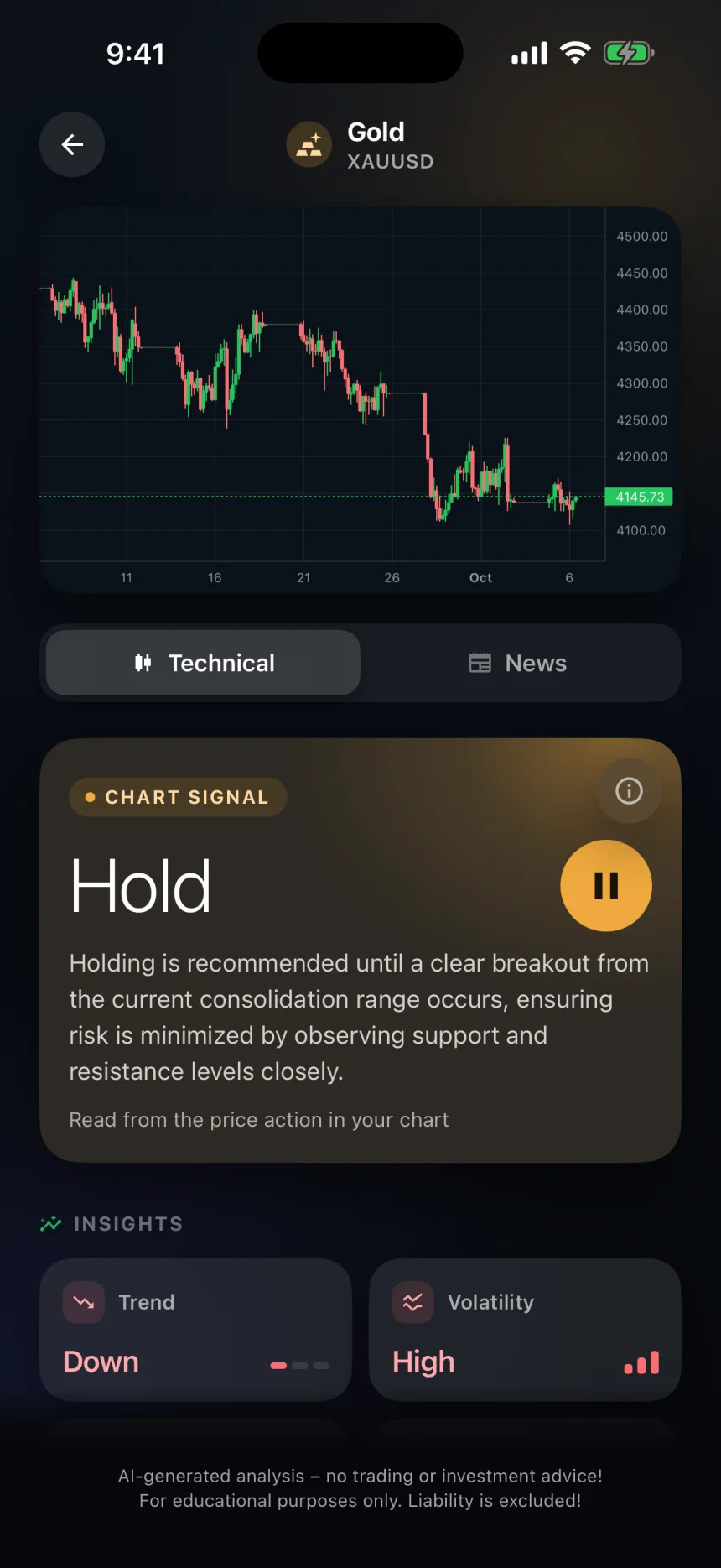
This is today's read on Intel. Point your camera at any chart and ChartDetector AI gives you a full technical analysis in seconds — free on iPhone and Android.
AI-generated from public news sources. Not financial advice.