Hang SengHSI50
Daily Market Briefing
Latest briefing
Hang Seng Index drops 1.03% to 24,062 amid AI stock sell-off
On October 15, 2026, the Hang Seng Index declined by 1.03%, closing at 24,062 points. This downturn was primarily driven by a significant sell-off in artificial intelligence (AI) related stocks, with several companies experiencing double-digit percentage losses. Market analysts attributed this decline to investor concerns over potential valuation bubbles in the AI sector.
Previous briefings
Hang Seng Index futures close down 1.05% at 24,074 points on October 15.
Over the past 24 hours, the Hang Seng Index has experienced a decline, closing at 24,074 points on October 15, down 1.05% from the previous day. This downturn is attributed to significant losses in major Hong Kong stocks, including Sands China, SMIC, and BYD, which have been leading the declines. Additionally, the Hang Seng Tech Index has also seen a decrease, closing at 4,082.06 points, down 2.21%.
Hang Seng Index rises 0.3% to 24,345 points as oil stocks rally
On October 13, 2026, the Hang Seng Index closed at 24,345 points, up 0.3% from the previous day. The rally was driven by a surge in oil stocks, with PetroChina leading the gains. However, technology stocks continued to face pressure, with the Hang Seng Tech Index declining by 0.8%.
Hang Seng Index rises 0.25% to 24,271.20 amid mixed tech sector performance
The Hang Seng Index closed at 24,271.20 points on October 12, 2026, up 0.25% from the previous day. The index's performance was influenced by a 4.9% decline in Xiaomi's stock, offset by gains in other sectors. Investors are also awaiting China's upcoming Consumer Price Index (CPI) and Producer Price Index (PPI) data, scheduled for release on October 14, 2026.
Hang Seng Index edges up 0.2% to 24,253.70 amid mixed Asian markets.
The Hang Seng Index inched higher by 0.2% to close at 24,253.70, reflecting a modest gain amid a mixed performance in Asian markets. The index's movement was influenced by regional developments, including a significant drop in oil prices following the U.S. announcement to purchase diesel from Russia. This decision has drawn bipartisan criticism and has had a ripple effect on global markets.
Hang Seng Index declines 1.87% to 24,045.71 amid market volatility.
Over the past week, the Hang Seng Index (HSI) experienced significant volatility, closing at 24,045.71 on Friday, down 1.87% from the previous week. This decline was influenced by a midweek sell-off that overshadowed gains in technology and biotech sectors. The market's performance was also affected by external factors, including rising U.S. Treasury yields and higher oil prices.
Hang Seng Index rises 0.65% to 23,941, led by gains in financial and technology stocks.
The Hang Seng Index opened higher, supported by advances in financial and technology sectors. Tencent Holdings rose 0.8%, Alibaba Group increased by 0.1%, and JD.com gained 1.1%. Financial stocks also contributed, with AIA Group up 1.8% and Ping An Insurance rising 1.1%.
Hang Seng Index drops 14% from 2026 high, closing at 23,963 on October 8.
The Hang Seng Index (HSI) declined to 23,963 on October 8, marking a 14% drop from its 2026 peak. This downturn was driven by significant losses in major Hong Kong stocks, including Sands China, SMIC, and BYD, amid concerns over rising U.S. Treasury yields and global economic uncertainties.
Hang Seng Index rises 0.3% to 24,040 as US jobs data eases rate hike concerns
The Hang Seng Index inched up 0.3% to 24,040 on October 5, 2026, following weaker-than-expected US jobs data that reduced expectations for an imminent Federal Reserve interest rate hike. This development provided a modest boost to investor sentiment in Hong Kong. ([gbcode.rthk.hk](https://gbcode.rthk.hk/TuniS/news.rthk.hk/rthk/en/component/k2/1872762-20261005.htm?utm_source=openai))
Hang Seng Index rises 1% to 24,281, led by tech and pharma stocks.
The Hang Seng Index closed at 24,281 on October 6, 2026, marking a 1% increase. This gain was primarily driven by strong performances in technology and pharmaceutical sectors, with companies like WuXi Biologics and Sino Biopharmaceutical rising over 4%. However, property developers faced challenges, with Sun Hung Kai Properties and CK Asset experiencing slight declines.
Hang Seng Index edges down 0.08% amid mixed sector performances on October 5, 2026.
On October 5, 2026, the Hang Seng Index (HSI) experienced a slight decline of 0.08%, closing at 23,952 points. This marginal decrease was influenced by selling pressure in real estate and financial sectors, which offset gains in technology stocks. Trading volumes were subdued, with mainland Chinese markets closed for the National Day holiday.
Hang Seng Index drops 2.6% to 23,972 amid global bond yield surge
The Hang Seng Index (HSI) declined by 2.6% to close at 23,972 on October 2, 2026, marking its largest one-day drop since July. This downturn was driven by rising global bond yields, with the U.S. 10-year Treasury yield reaching 5.34%, its highest since 2002, and escalating concerns over inflation and interest rates. The absence of Southbound Stock Connect flows, due to mainland markets being closed, further intensified the sell-off.
Hang Seng Index drops 2.6% to 23,972.29, below 24,000 mark.
The Hang Seng Index declined by 2.6% on October 2, 2026, closing at 23,972.29, dipping below the 24,000 threshold. This downturn was driven by a surge in U.S. Treasury yields and a global bond sell-off, which dampened investor sentiment. Additionally, the suspension of Stock Connect trading due to mainland China's Golden Week holiday reduced liquidity, exacerbating the market's decline.
Hang Seng Index plunges 2.7% to 23,943, marking largest drop since July 2026.
The Hang Seng Index experienced a significant decline of 2.7%, closing at 23,943, the steepest drop since July 2026. This downturn was driven by rising U.S. Treasury yields, which reached 5.34%, the highest since 2002, and elevated oil prices, with Brent crude at approximately $102.6 per barrel. Additionally, the absence of Southbound Stock Connect flows, due to mainland markets being closed, further dampened investor sentiment.
Hang Seng Index futures close at 24,422 points on October 1, down 0.691%
On October 1, 2026, the Hang Seng Index futures closed at 24,422 points, a decline of 0.691%. This downturn was influenced by the Golden Week holiday in mainland China, which led to reduced liquidity and trading volumes in Hong Kong. Additionally, the suspension of Stock Connect trading between Hong Kong and mainland China contributed to market volatility.
Hang Seng Index rises 0.1% to 24,551.47 amid AI optimism and Iran war concerns.
The Hang Seng Index edged up 0.1% to 24,551.47, supported by optimism in artificial intelligence and semiconductor sectors. However, ongoing concerns about the Iran conflict capped gains.
Hang Seng Index faces critical resistance at 24,800 amid mixed technical signals.
The Hang Seng Index (HSI) is encountering significant resistance around the 24,800 level, with technical indicators presenting conflicting signals. Recent trading patterns suggest potential for both upward and downward movements, leaving investors uncertain about the index's short-term direction.
Hang Seng Index rises 0.78% to 24,703 as financials lead recovery.
The Hang Seng Index rebounded by 0.78% to close at 24,703, ending a three-day losing streak. Financial stocks, including HSBC Holdings and AIA Group, provided significant support, while technology shares showed mixed performance.
Hang Seng Index opens 0.96% lower; tech stocks decline, Alibaba-W drops over 2%
The Hang Seng Index opened 0.96% lower at 24,523.50 points on September 25, 2026, with the Hang Seng TECH Index falling 0.99% to 4,318.17 points. Technology stocks led the decline, notably Alibaba-W (09988), which dropped over 2%. Conversely, Chow Tai Fook Creation (00659) rose 3.61% after reporting an 11% year-on-year increase in net profit for the fiscal year ending June 30, 2026.
Hang Seng Index declines 1% to 24,508 amid tech sector weakness.
The Hang Seng Index fell 1% to close at 24,508 on September 25, 2026, driven by declines in major technology stocks. Notably, NetEase, Xiaomi Group, and JD.com each experienced losses exceeding 1.5%. The downturn in the tech sector overshadowed regional optimism, leading to the index's decline.
Hang Seng Index breaches key support levels, nearing oversold territory
The Hang Seng Index (HSI) has recently fallen below critical technical support levels, indicating a strengthening bearish trend. Technical indicators suggest the market is approaching oversold conditions, which could signal a potential short-term rebound.
Hang Seng Index falls 1.52% amid Alibaba's AI chip announcement
The Hang Seng Index declined by 1.52% on September 23, 2026, closing at HK$4.288. This downturn was influenced by Alibaba's unveiling of its Zhenwu V900 AI chip, which may have raised concerns about increased competition in the technology sector. Additionally, the CSOP Hang Seng TECH Index ETF, which tracks the Hang Seng TECH Index, also experienced a 1.52% drop, reflecting broader market apprehension.
Hang Seng Index rises 0.6% to 25,185.26, following Wall Street's rally.
The Hang Seng Index increased by nearly 0.6% to 25,185.26, mirroring the positive momentum from Wall Street's recent performance. This uptick was influenced by a rally in U.S. markets, where the S&P 500 climbed 1.5%, nearing a record high. Additionally, a slight decline in oil prices eased inflation concerns, contributing to the market's upward movement.
Hang Seng Index closes at 24,750.78, down 0.27% amid US rate hike concerns
Over the past week, the Hang Seng Index (HSI) experienced a slight decline of 0.27%, closing at 24,750.78. This downturn was influenced by concerns over potential US interest rate hikes, elevated oil prices, and volatility in Chinese AI sector valuations. The index's performance was also affected by fluctuations in US Treasury yields and investor sentiment regarding technology stocks.
Hang Seng Index declines 0.3% amid AI sector concerns and rising US Treasury yields.
Over the past week, the Hang Seng Index (HSI) experienced a slight decline of 0.3%, closing at 24,750.78 points. This downturn was influenced by concerns over the sustainability of AI valuations and the impact of rising US Treasury yields on global markets.
Hang Seng Index declines 0.44% amid mixed market sentiment and tech sector weakness
The Hang Seng Index (HSI) experienced a 0.44% decline, closing at 25,244 points. This downturn was influenced by a global sell-off affecting gold and cryptocurrency markets, which dampened investor sentiment. Additionally, the technology sector faced challenges, with the Hang Seng Tech Index falling 0.34%.
Hang Seng Index opens 0.94% lower at 24,480 amid rate hike concerns
The Hang Seng Index (HSI) opened 0.94% lower at 24,480 on September 17, 2026, following the U.S. Federal Reserve's first rate hike in over three years. This move has heightened concerns about potential economic slowdowns and increased borrowing costs, leading to a cautious market sentiment.
Hang Seng Index drops 1% to 24,667 amid AI valuation concerns and geopolitical tensions
The Hang Seng Index declined by 1% to close at 24,667 on September 15, 2026, marking a two-month low. This downturn was driven by concerns over AI-related valuations and escalating geopolitical tensions in the Middle East, which have contributed to market uncertainty.
Hang Seng Index rises 0.4% to 24,910.08 amid cautious investor sentiment.
The Hang Seng Index inched higher by 0.4% to close at 24,910.08 on September 14, 2026, as investors remained cautious ahead of key global central-bank decisions. The index traded within a range of 24,662.11 to 24,926.24, indicating steady demand into the final hour of trade. The modest advance keeps the Hang Seng above the psychologically significant 24,900 mark, with bulls likely to eye a push toward fresh near-term highs should positive sentiment persist in the sessions ahead.
Hang Seng Index declines 0.6% to 24,805 amid rising oil prices and rate hike concerns
The Hang Seng Index fell 0.6% to 24,805 on September 11, 2026, influenced by escalating oil prices and growing expectations of U.S. interest rate hikes. These factors dampened investor sentiment, leading to a broad market sell-off.
Analyze any chart in seconds
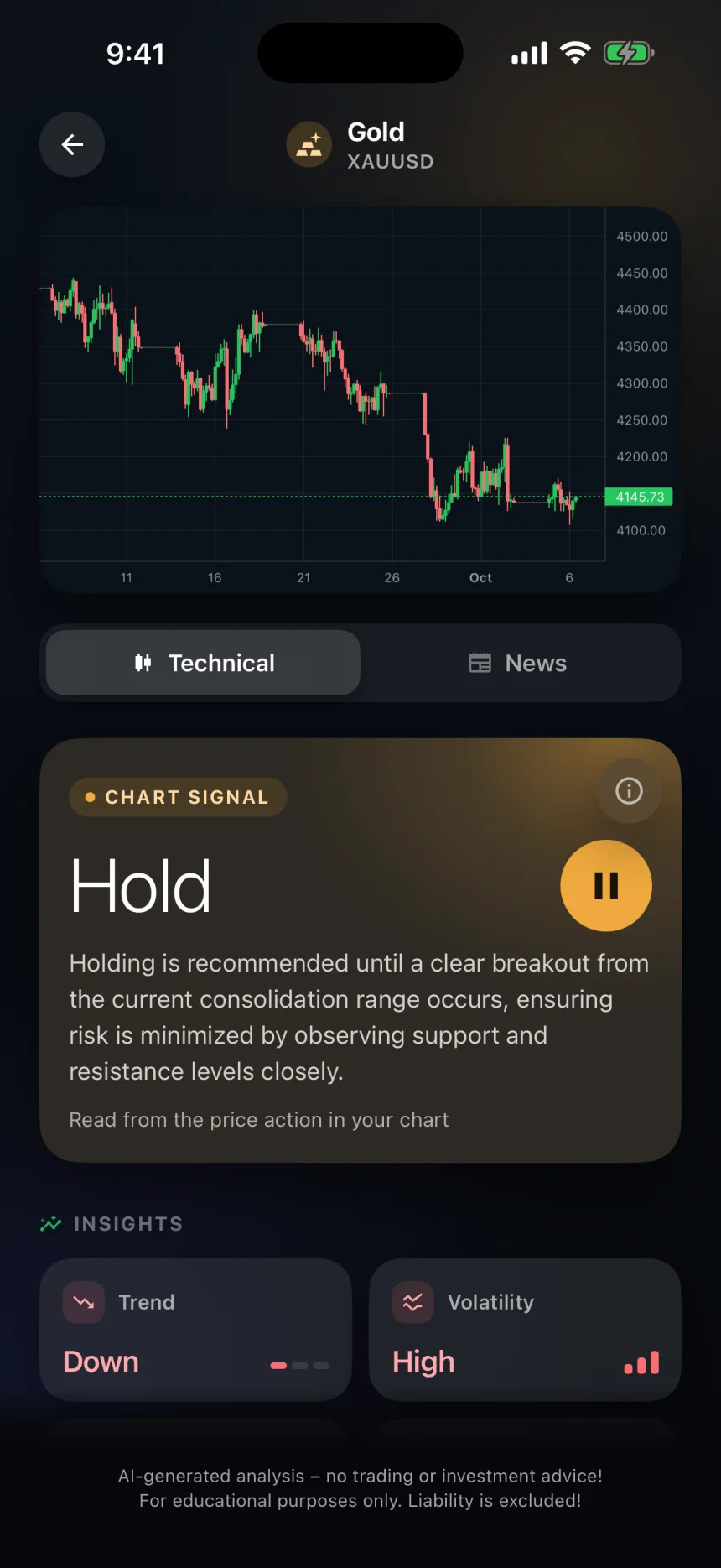
This is today's read on Hang Seng. Point your camera at any chart and ChartDetector AI gives you a full technical analysis in seconds — free on iPhone and Android.
AI-generated from public news sources. Not financial advice.