FTSE 100FTSE100
Daily Market Briefing
Latest briefing
FTSE 100 rises 0.54% to 10,782.98 after UK Finance Minister's fiscal commitment.
The FTSE 100 climbed to a near one-month high, bolstered by Finance Minister John Healey's reaffirmation of fiscal discipline and stronger-than-expected GDP data. Healey's commitment to maintaining fiscal discipline and the UK's GDP growth in August contributed to the index's positive performance.
Previous briefings
FTSE 100 rises to 3-week high at 10,762.01, led by financial stocks and easing bond yields.
The FTSE 100 reached a three-week high of 10,762.01 points, driven by strong performance in financial stocks and a decline in bond yields. The broader banks sector rose 1.2%, with NatWest advancing 2.6% after Barclays upgraded the stock to 'overweight.' Additionally, falling oil prices and easing bond yields supported risk appetite.
FTSE 100 closes at 10,498.53, down 0.4% amid rising oil prices and bond yields
The FTSE 100 declined by 0.4% to 10,498.53 points, influenced by climbing oil prices and surging bond yields. These factors heightened investor caution, particularly affecting banking stocks.
FTSE 100 declines as bond yields reach multi-decade highs; energy shares surge.
Over the past 24 hours, the FTSE 100 has experienced a decline, influenced by rising bond yields and inflation concerns. While energy stocks have seen gains due to surging oil prices, the overall market sentiment remains cautious.
FTSE 100 declines 0.2% as bond yields surge to multi-decade highs
The FTSE 100 index fell 0.2% on October 8, 2026, closing at 10,428.7 points, as rising global bond yields dampened investor sentiment. The 10-year UK gilt yield reached a 19-year high of 5.527%, contributing to the market's decline.
FTSE 100 declines 0.8% to 10,458.5 as banks lead losses amid rising bond yields
The FTSE 100 index fell 0.8% to 10,458.5 points on October 7, 2026, as financial stocks led the decline. The drop was influenced by surging bond yields and elevated oil prices, which dampened investor sentiment. The British 30-year bond yield reached a 28-year high, and Brent crude prices held around $101 per barrel.
FTSE 100 falls to three-month low as surging yields dampen risk appetite
The FTSE 100 declined to a three-month low, closing at 10,428.7 points, as rising global bond yields heightened inflation concerns and reduced investor risk appetite. The 30-year UK gilt yield surged to 5.9352%, its highest since early 1998, while the 10-year gilt yield reached 5.4033%, the highest since 2007. Financial stocks were particularly affected, with banks like HSBC, Barclays, and NatWest Group experiencing significant declines.
FTSE 100 rises 0.34% to 10,497.94 as mining and energy stocks lead gains.
The FTSE 100 index closed higher on Monday, recovering from its steepest drop since April. Gains were driven by mining and energy sectors, while concerns over rising fuel prices and potential interest rate hikes capped further upside.
FTSE 100 closes at 10,461.95, marking a 2.2% weekly decline amid rising bond yields.
The FTSE 100 experienced a 2.2% decline over the past week, closing at 10,461.95 points. This downturn was primarily driven by a sell-off in government bonds, which led to higher yields and dampened investor risk appetite. Additionally, energy stocks faced pressure due to fluctuating oil prices, while mining stocks provided some support as copper prices rebounded.
FTSE 100 rises 0.3% to 10,461.95 as easing bond yields and oil prices boost sentiment
The FTSE 100 experienced a modest rebound, closing up 0.3% at 10,461.95 points. This uptick was driven by a decline in bond yields and a drop in oil prices, which alleviated inflation concerns. Investors are also awaiting the upcoming U.S. non-farm payrolls report for further economic insights.
FTSE 100 falls 1.68% to 10,428.7, a three-month low, amid surging bond yields.
The FTSE 100 declined by 1.68% to 10,428.7 on October 1, 2026, marking its lowest point in three months. This downturn was driven by a sharp rise in global bond yields, which heightened inflation concerns and dampened investor sentiment. The banking sector was particularly affected, with major banks like HSBC and Barclays each dropping approximately 4%.
FTSE 100 falls 0.45% to 10,636.71 amid bond yield concerns
The FTSE 100 declined by 0.45% to close at 10,636.71 on September 29, 2026, as rising bond yields overshadowed lower oil prices. Investors remain cautious due to inflation fears and potential interest rate hikes.
FTSE 100 edges lower amid rising bond yields and weaker metal prices.
The FTSE 100 declined by 0.10% to close at 10,684.88 on September 28, 2026. This downturn was influenced by a 4.9% drop in precious metals and a 1.2% decrease in industrial miners, reflecting investor concerns over rising bond yields and declining metal prices. Additionally, oil prices surged over 3% following the U.S. rejection of an Iran peace plan, intensifying inflation fears and expectations of higher global interest rates. Consequently, the yield on the British 10-year government bond reached its highest level since July 2007.
FTSE 100 closes lower as financial stocks decline amid global market volatility.
In the past 24 hours, the FTSE 100 index experienced a decline, primarily driven by a downturn in financial stocks. This movement reflects broader global market volatility, influenced by various economic factors.
FTSE 100 closes at 10,700.65, down 0.1%, amid mixed corporate earnings
The FTSE 100 index edged lower by 0.1% to 10,700.65 on September 23, 2026. While energy stocks like BP and Shell saw gains due to rising oil prices, the index was weighed down by declines in financial and retail sectors. Investors are closely monitoring developments in the Middle East and the upcoming visit of Chinese President Xi Jinping to the U.S.
FTSE 100 closes 1.4% lower at 10,659.13 amid financial sector declines
The FTSE 100 index declined by 1.4% to close at 10,659.13 points, primarily due to significant losses in financial stocks. Banks, including Lloyds and HSBC, experienced declines of 2.9% and 1.6%, respectively, contributing to the overall downturn.
FTSE 100 retreats 1.4% as banks and energy stocks decline; index closes at 10,659.13.
The FTSE 100 index fell 1.4% to 10,659.13 points on September 18, 2026, primarily due to declines in banking and energy sectors. Banks lost 2.1%, with Lloyds and HSBC falling 2.9% and 1.6%, respectively. Energy companies were down 0.8%, as oil prices fell for a third straight session on easing concerns over Saudi supply disruptions.
FTSE 100 closes at 10,659.13, down 1.4% amid financial sector declines.
In the past 24 hours, the FTSE 100 index declined by 1.4%, closing at 10,659.13 points. This downturn was primarily driven by significant losses in the financial sector, with major banks like Lloyds and HSBC experiencing notable declines. Investors are also closely monitoring upcoming economic data and central bank decisions, which may influence future market movements.
FTSE 100 retreats 0.6% to 10,751.57 amid banking and energy sector declines.
In the past 24 hours, the FTSE 100 index experienced a 0.6% decline, closing at 10,751.57 points. This downturn was primarily driven by losses in the banking and energy sectors, with major banks like Lloyds and HSBC falling 1.2% and 0.6%, respectively, and energy companies dropping 0.8% due to easing concerns over Saudi supply disruptions.
FTSE 100 declines 1.4% to 10,659.13 as banks and telecoms weigh on index.
The FTSE 100 index fell 1.4% to 10,659.13 points on September 18, 2026, primarily due to declines in financial and telecom sectors. Banks dropped 2.1%, with Lloyds and HSBC falling 2.9% and 1.6%, respectively. Telecom stocks were the biggest percentage decliners, with Airtel Africa losing 11.3% after reports suggested its Airtel Money division was considering downsizing its London IPO.
FTSE 100 rises 0.8% to 10,770.93; Kingfisher up after Deutsche Bank upgrade.
The FTSE 100 gained 0.8% to close at 10,770.93, driven by a Deutsche Bank upgrade for Kingfisher. Utilities and energy stocks also contributed to the positive performance.
FTSE 100 declines 0.59% to 10,634.49 amid rising oil prices and bond yields
The FTSE 100 index fell 0.59% to 10,634.49 on September 15, 2026, as escalating oil prices and rising bond yields weighed on investor sentiment. The surge in oil prices intensified inflation concerns, leading to higher bond yields and impacting stock market performance.
FTSE 100 rises 0.4% to 10,697.57 as defensive stocks gain amid oil price surge.
The FTSE 100 increased by 0.4% to 10,697.57 points, driven by gains in defensive sectors such as healthcare and consumer staples. This uptick occurred despite broader market concerns over rising oil prices and upcoming central bank decisions.
FTSE 100 rises 87 points to 10,695 amid easing oil prices and strong UK GDP data.
The FTSE 100 ended a five-day losing streak, climbing 87 points to 10,695. This rally was driven by a decline in oil prices and robust UK economic growth, with GDP increasing by 0.4% in July, surpassing expectations. Additionally, US consumer prices rose 0.4% in August, aligning with forecasts and boosting investor confidence.
FTSE 100 rises 0.1% to 10,621.79 as AI-driven UK GDP growth offsets oil price concerns
The FTSE 100 edged higher by 0.1% to 10,621.79, supported by a 0.4% month-on-month GDP growth in July, driven by AI-related activities. However, the index remains cautious due to rising oil prices, with Brent Crude surpassing $100 per barrel, influenced by Middle East tensions.
FTSE 100 closes lower as crude oil prices surge past $100 amid Middle East tensions.
The FTSE 100 declined as crude oil prices surpassed $100 per barrel, driven by escalating Middle East tensions. This surge in oil prices led to increased inflation concerns, impacting investor sentiment and contributing to the index's downturn.
FTSE 100 slips 0.1% to 10,811.66 as Bailey flags inflation risks
The FTSE 100 index declined by 0.1% to close at 10,811.66 on September 8, 2026, following comments from Bank of England Governor Andrew Bailey about potential inflation risks due to elevated energy prices. This cautionary outlook contributed to a slight downturn in the index.
FTSE 100 dips 0.1% to 10,811.66 as Bailey flags inflation risks.
The FTSE 100 declined by 0.1% to close at 10,811.66 on September 8, 2026, following comments from Bank of England Governor Andrew Bailey about potential inflation risks due to elevated energy prices. This outlook contributed to a cautious investor sentiment, leading to a slight downturn in the index.
FTSE 100 closes at 10,822.13, down 0.08% amid mixed sector performances.
Over the past 24 hours, the FTSE 100 index experienced a slight decline, closing at 10,822.13 points, down 0.08%. This movement was influenced by mixed performances across various sectors, with notable losses in mining stocks and gains in technology and insurance sectors.
FTSE 100 remains steady as investors await US inflation data; Balfour Beatty hits record high.
The FTSE 100 index experienced minimal movement as investors adopted a cautious stance ahead of upcoming US inflation data. This data is anticipated to show a moderate increase in consumer prices for July, potentially influencing the Federal Reserve's interest rate decisions. In contrast, midcap stocks outperformed, notably Balfour Beatty, which surged to a record high following an upward revision of its annual forecast.
Analyze any chart in seconds
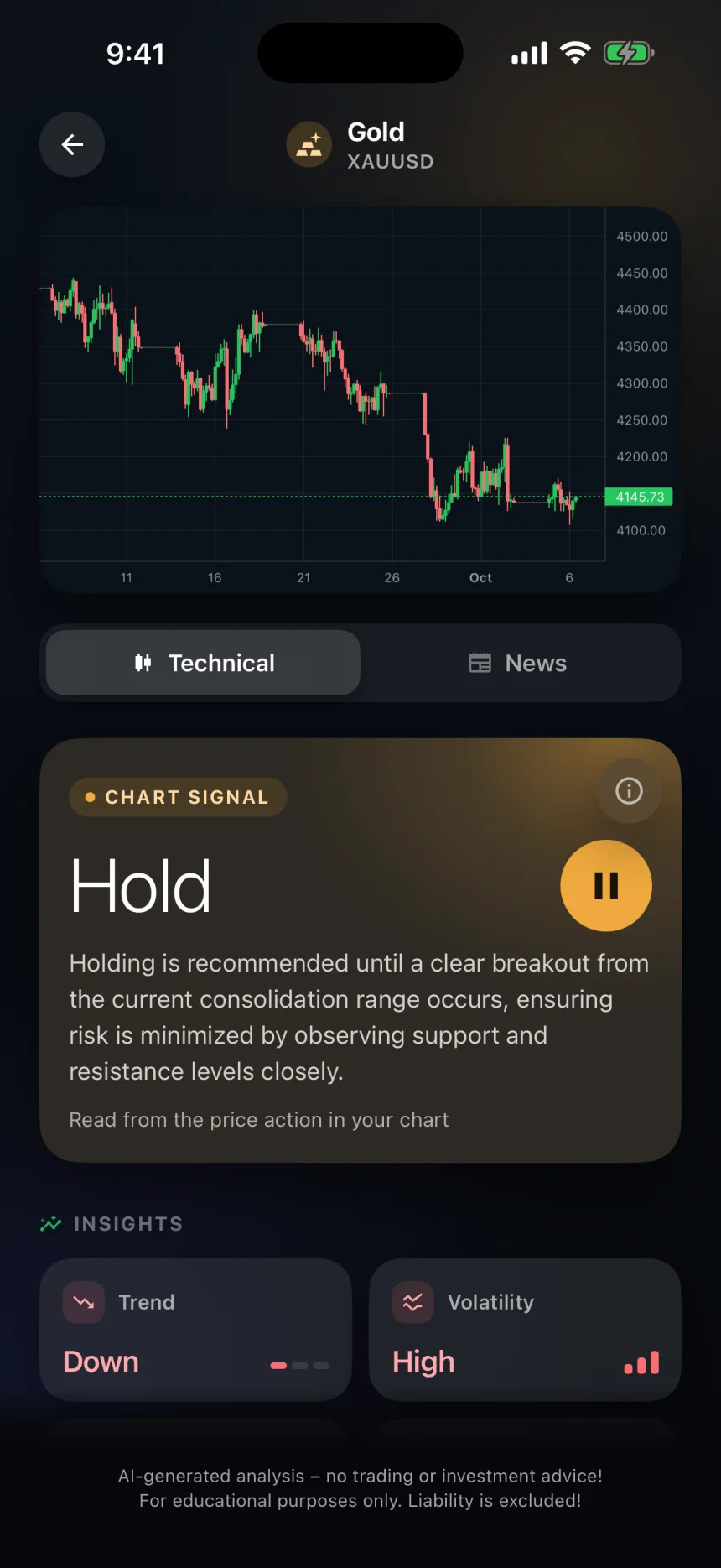
This is today's read on FTSE 100. Point your camera at any chart and ChartDetector AI gives you a full technical analysis in seconds — free on iPhone and Android.
AI-generated from public news sources. Not financial advice.